Nobody underwrites every deal that reaches the desk.
And what reaches you is only what someone chose to send. EndCap reads every OM you forward — the whole record, each figure cited to its page — enriches it with public data, and underwrites it against your buy box in your own model. Your analyst starts where the machine stopped.
Forward the deal. It comes back underwritten.
Six steps, one of which is yours.
- 01IntakeForward the dealYour firm gets its own intake address. Send it any offering memorandum — a broker's email, a forwarded thread, a PDF or a workbook. That is the entire workflow on your side.
- 02ExtractThe record comes outRent roll, operating expenses, lease terms and deal facts are extracted as structured rows, each figure carrying the document and page it was read from. Anything we can't ground, we flag or leave blank.
From the live product · Rent rollSample data 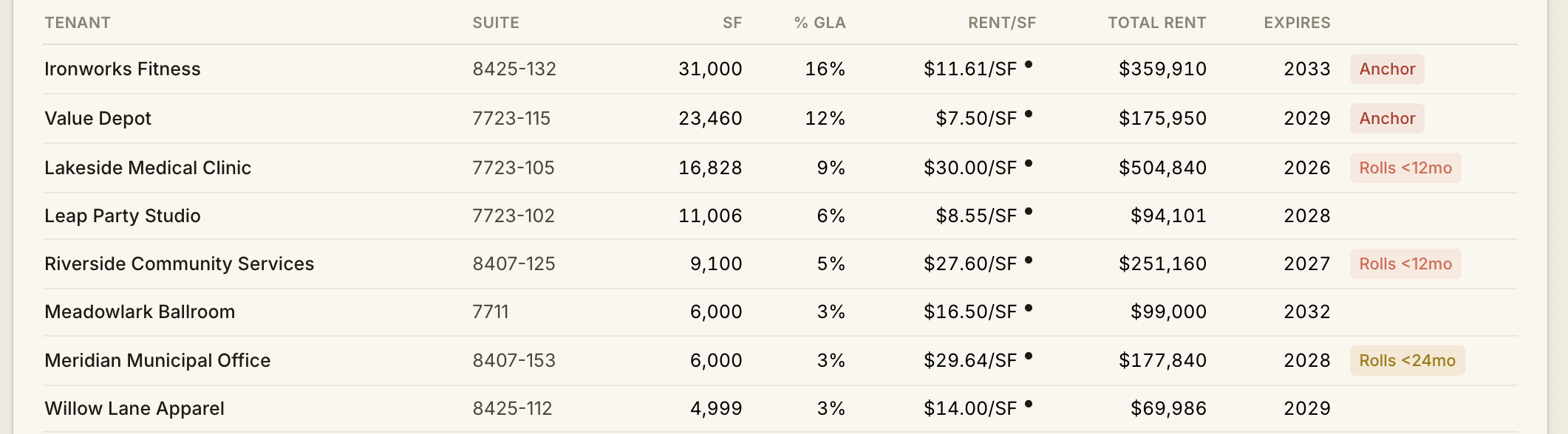 The rent roll as rows — suite, area, rent, expiry — not a screenshot of a PDF table.
 - 03LibraryIt lands in your libraryEvery OM is kept, underwritten or not. The deals you pass on still become comps only your firm can query — your own deal flow compounding into a private database instead of dying in an inbox.
From the live product · PipelineSample data 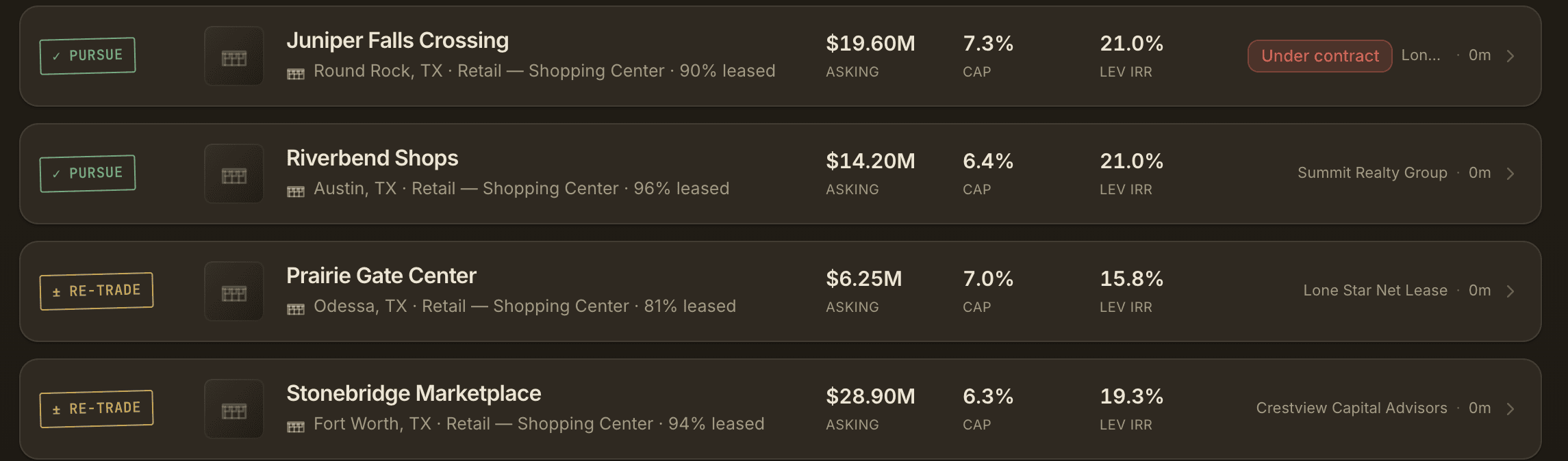 Every deal that crossed the desk, carrying the verdict it earned.
 - 04EnrichPublic data is layered onFlood zone and hazard risk, crime relative to the national rate, demographics and daytime population, traffic counts, tax and assessment records — attached to the parcel, independent of the brochure.
From the live product · Public dataSample data  Read off the parcel, not the brochure — and each tile names the record it came from.
 - 05UnderwriteIt's underwritten to your standardsYour buy box and your firm's criteria — insurance minimums, management fee, vacancy, exit cap, hold — are applied by rule and cited, then your own financial model is populated with the result.
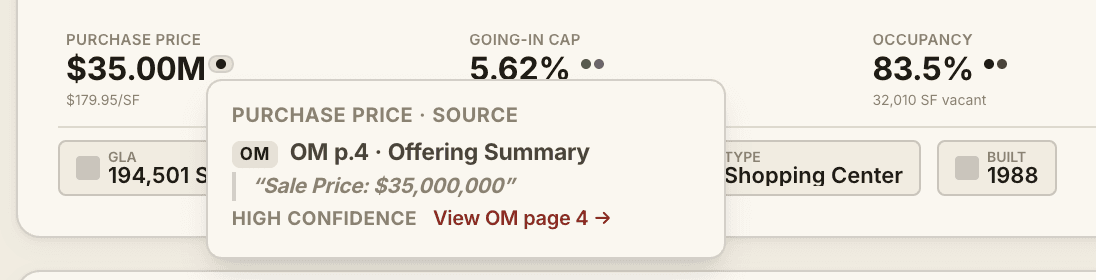
From the live product · BriefSample data  The dots beside a figure are its sources — open one and you get the page it came from.
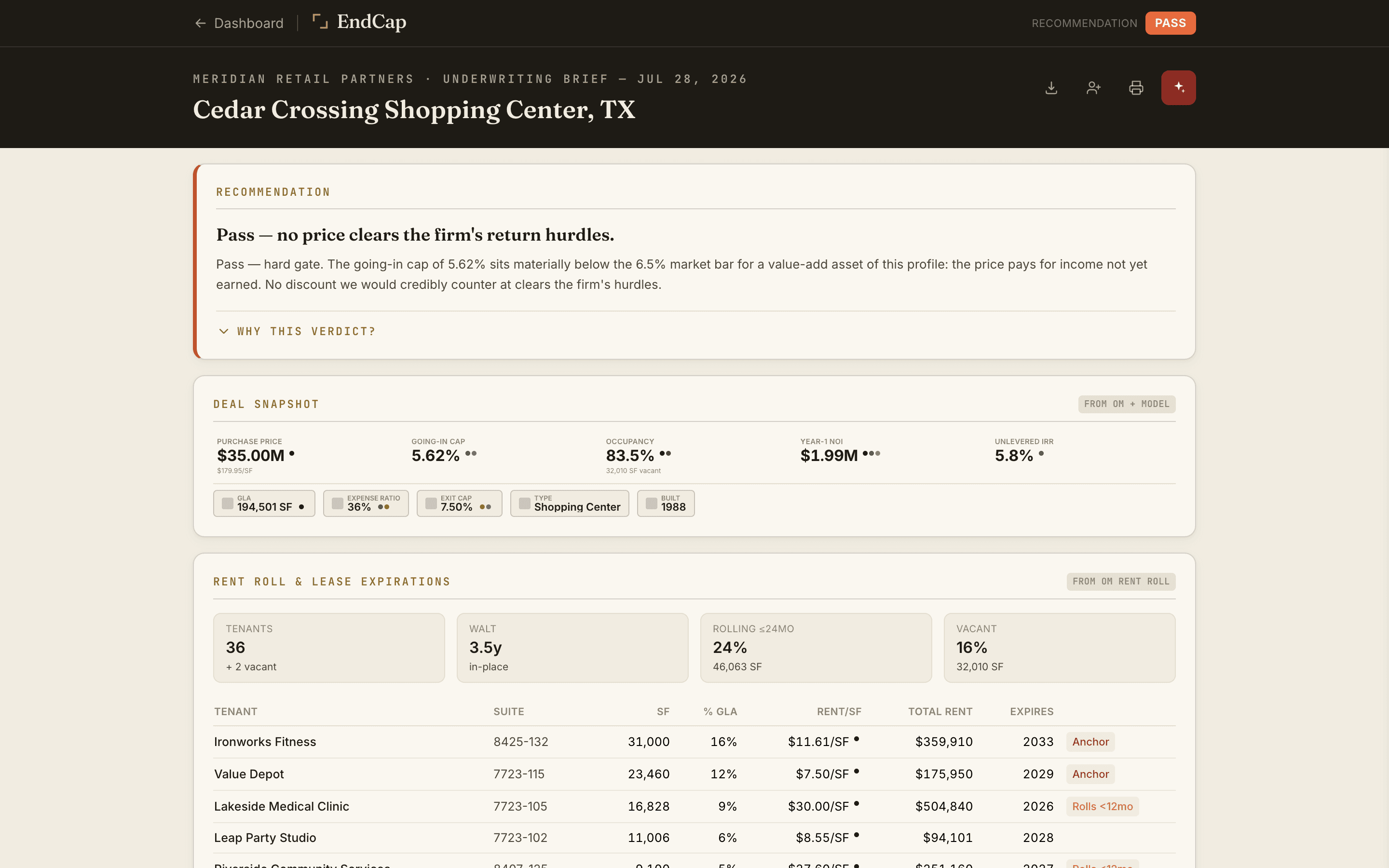
 - 06BriefYour analyst picks it upA brief with the verdict, the hurdles it clears or misses, and the lines behind them. Click a figure to see its source. Change an assumption and the model re-runs — the machine did the reading, not the judgment.
From the live product · BriefSample data 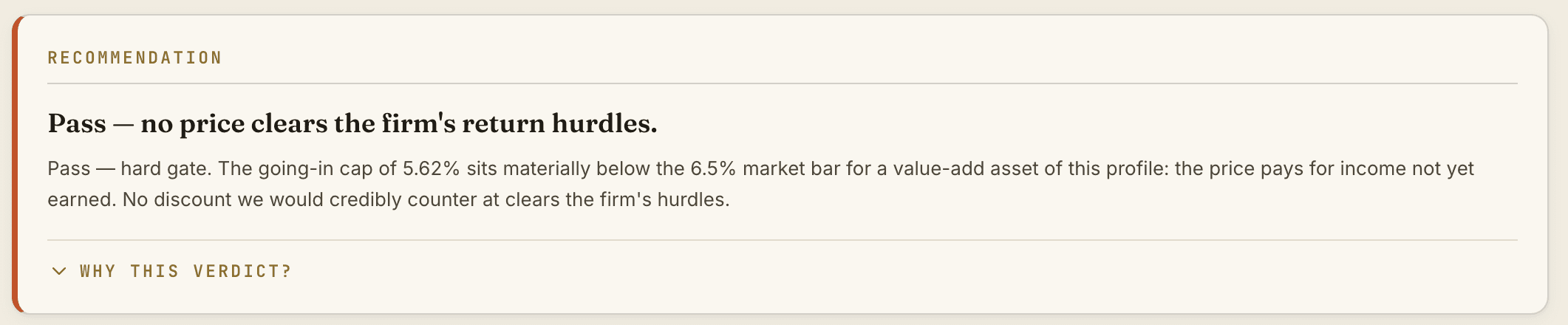 A verdict has to say why, in the firm's own rule, or it is just an opinion.
From the live product · BriefSample data  The same card on a deal that clears the bar. It argues both ways or it isn't a verdict.
What the analyst picks up.
The whole surface, unretouched: the brief the machine hands over, verdict first, with the record it was built from underneath.Shown at page scale — the fragments above are full size.
The same record, run the other direction: screen the off-market population against your box, then find the owner and make the call.
For sourcing teams →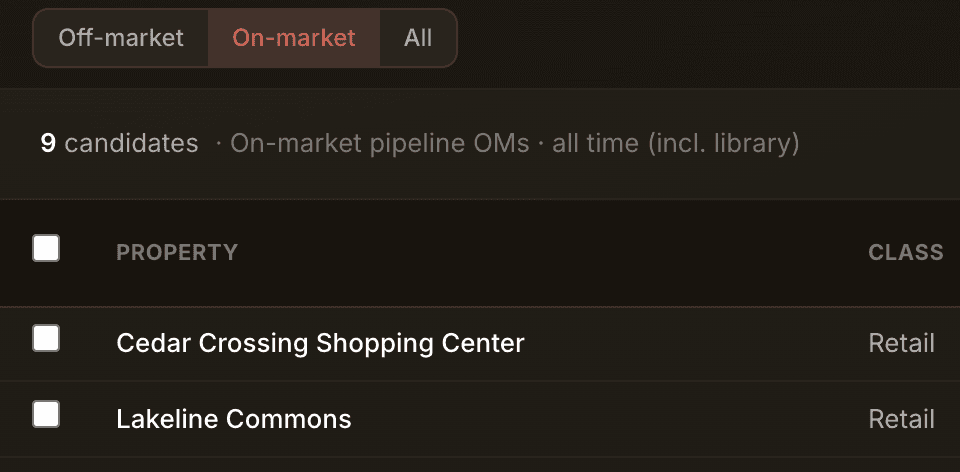
A first pass you can defend line by line.
A citation that points at the wrong page is worse than none. So every figure opens onto the document it was read from, firm overrides are labeled as overrides, and a number we can’t ground is flagged or left blank rather than invented.
What comes with the desk.
Put your next OM through it.
Once you’re in, start with a deal you know cold and read the brief against your own numbers. That is the only test worth running.