The deal you want isn’t listed.
Neither is its owner.
EndCap maps on-market and off-market property in one place, resolves the person behind the entity — a name, an entity, and the best contact the record supports — and hands it to the CRM you already run, or works it in ours, with the dialer, the transcripts and the paper trail attached.
From “who owns it” to “we talked to them.”
Six steps that usually live in six tools, on one record.
- 01MapMap the market — listed and notOn-market listings and off-market property sit on one intelligence map, filtered against your criteria. Every OM your firm receives lands there too, so your own deal flow becomes part of the map instead of an inbox nobody searches.
- 02OwnershipFind the ownerOff-market means the owner is the entry point. We resolve a parcel to its owner of record, unravel the entity behind it where the filings allow, and skip-trace across multiple sources for the best contact the record supports.
From the live product · Call sheetSample data 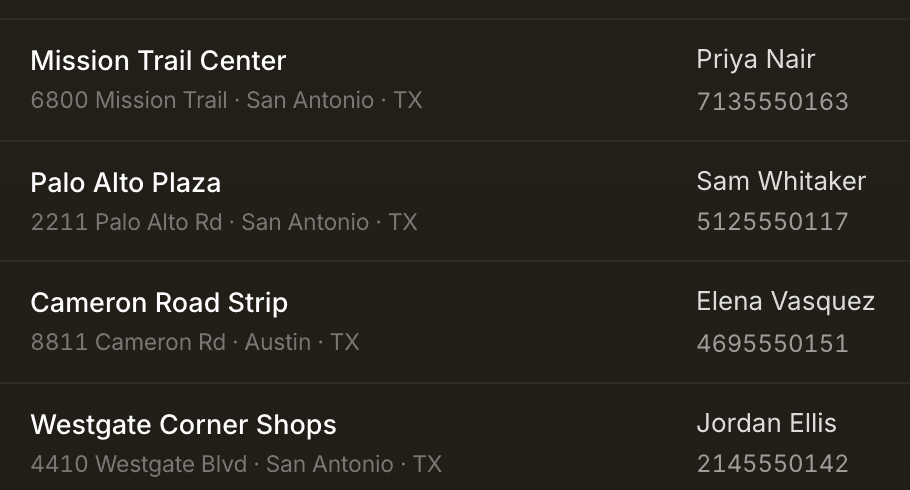 Each property carries the owner the record resolves to, and the number to reach them on.
 - 03EnrichEnrich the recordParcel and ownership detail, tenancy, debt, and the overlays that decide whether a property is worth a call — FEMA flood, hazard risk, crime, opportunity zones and demographics, drawn on the same map.
From the live product · ScreenerSample data 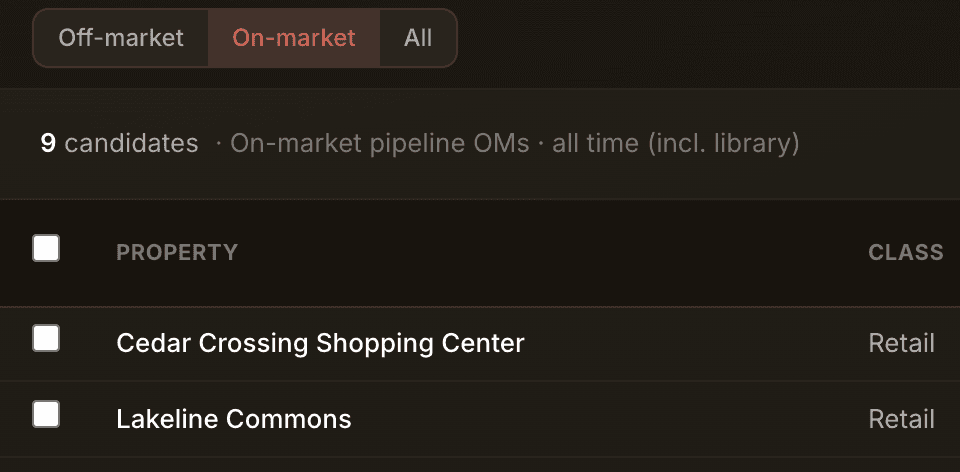 Screen the population against your box before anyone dials it — the count says what it counted.
 - 04CRMPush it where you workSend the record into HubSpot or Salesforce through the built-in integrations, or work it in EndCap's own CRM — where the owner, the property and the call sheet are already the same row.
From the live product · Call sheetSample data  One row: the property, its owner, and the number to call.
 - 05DialWork the listThe power dialer is part of the same surface: one-touch voicemail drop in your own recorded voice, call recordings, transcripts and outcomes filed against the record, and analytics across the whole campaign. Every number is re-checked against the DNC list, server-side, at dial time.
- 06SignalsGet told when it movesAlerts on your saved screens, plus off-market distress signals — debt maturity, special-servicer transfers, tax distress — so the first conversation happens before the listing does.
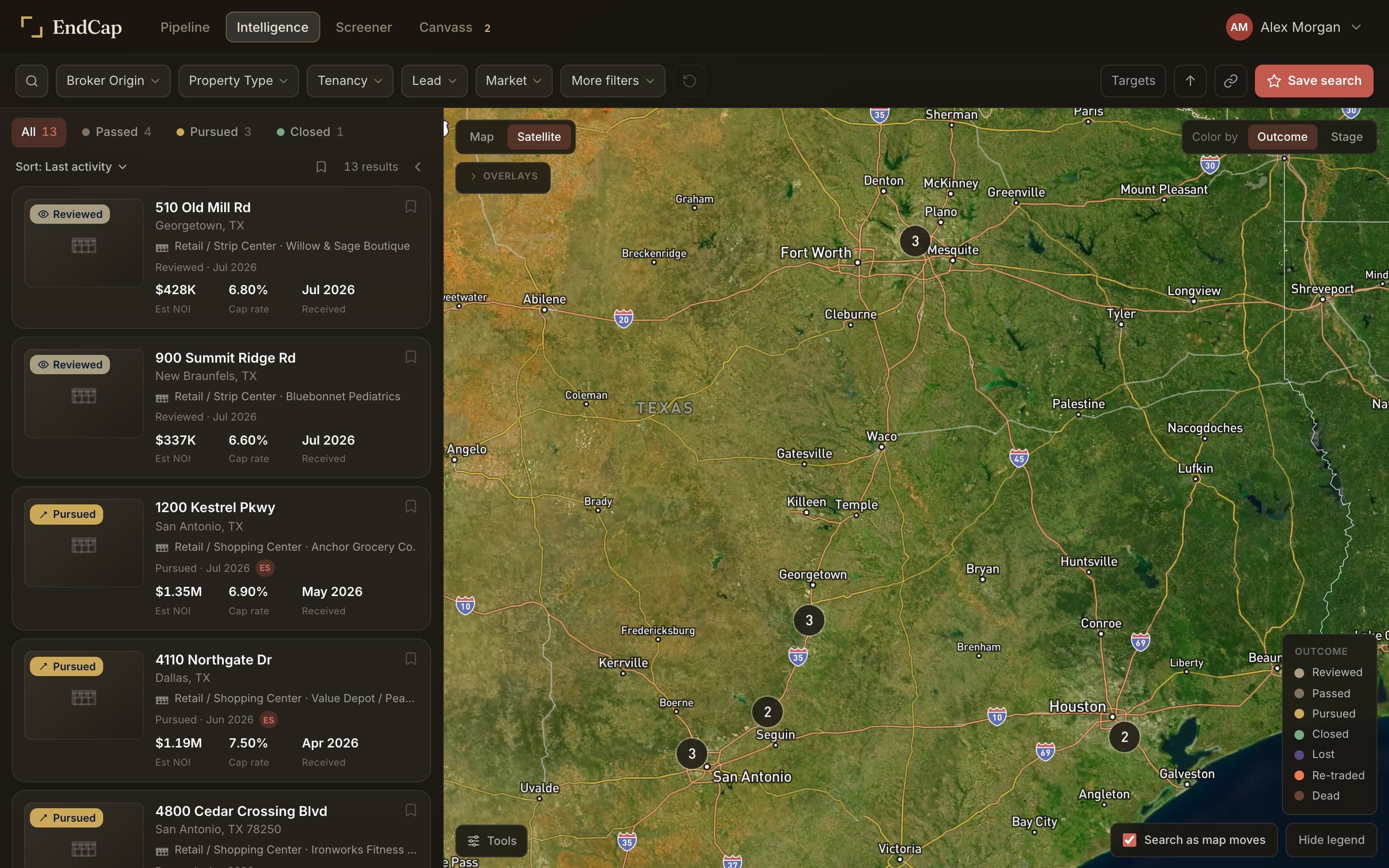
The map, the list, and the owner.
The whole surface, unretouched: where the property is found — and, in the fragments above, who owns it and how the list gets screened.Shown at page scale — the fragments above are full size.
Call before it’s a listing.
The reason an owner takes the call is usually in a public record months before a broker is hired. Those records are read on a schedule and attached to the parcel.
- Loan maturities read out of securitized loan tapes
- Special-servicer and watchlist transfers, as they are reported
- Tax delinquency and auction calendars where the county publishes them
- Notices, filings and permits where the record is public
A signal is only worth acting on if it is early and it is dated. Every one carries the filing or tape it came from and the day it appeared, so “distressed” is a fact with a source rather than a label someone applied. Where we don’t have the record for a county, the screener says so instead of showing you a quiet map.
What comes with the engine.
Start with the block you already want.
Pick a submarket you canvass today. See who owns it, what’s moving under it, and how far the list gets before it goes cold.